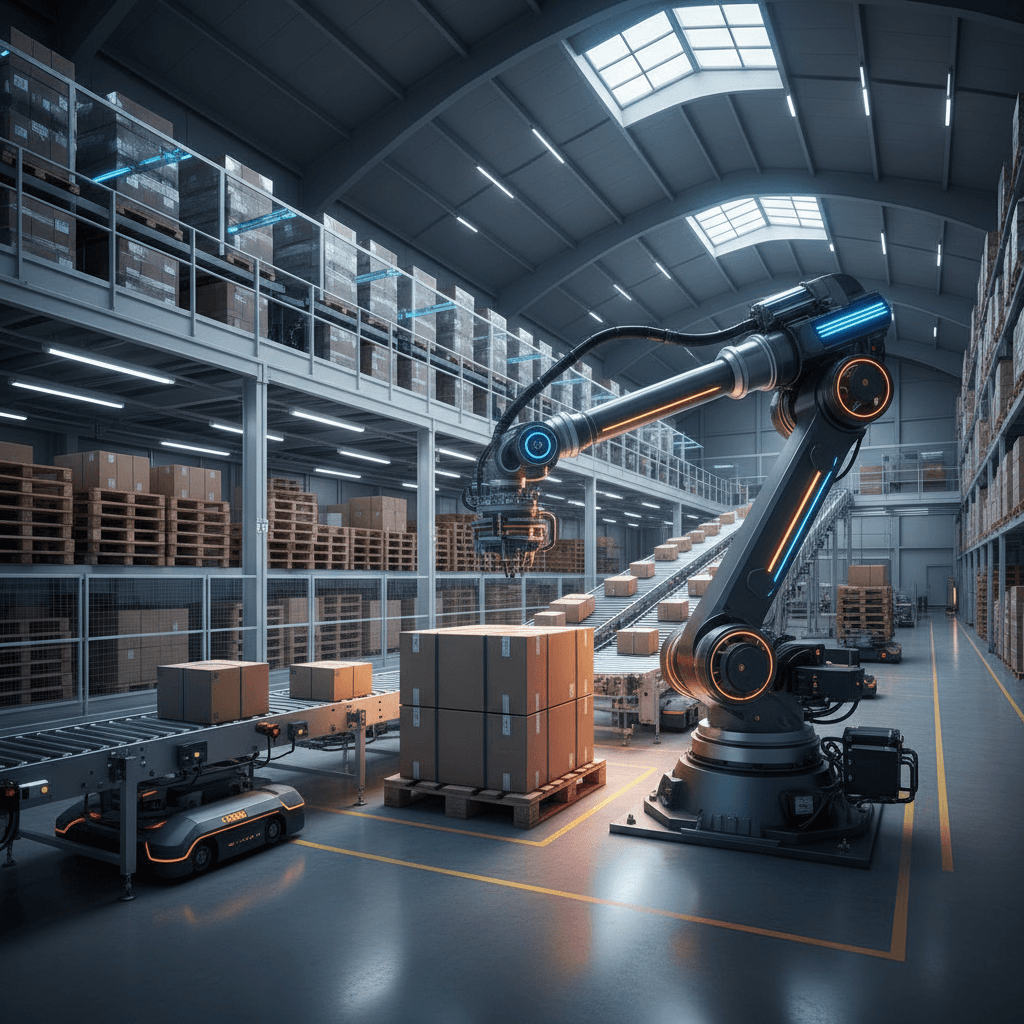
Robotic Palletizers That Never Stop Working
Increase throughput, reduce labor costs, and eliminate repetitive strain injuries with automated palletizing systems built for 24/7 operation. From collaborative cobots to high-speed industrial arms — find the right robotic palletizer for your line.
What Are Robotic Palletizers?
A robotic palletizer is an automated system that uses an industrial robot or collaborative robot (cobot) to stack products onto pallets at the end of a production or packaging line. The robot picks cases, bags, bundles, or containers from a conveyor and places them in a pre-programmed pattern, building stable, shippable pallet loads without manual labor.
Modern robotic palletizing systems handle payloads from 5 kg to over 500 kg, operate at speeds up to 30 cycles per minute, and adapt to mixed-SKU operations through vision guidance and recipe-based pattern programming. They are deployed across food and beverage, consumer goods, pharmaceuticals, building materials, and logistics operations worldwide.
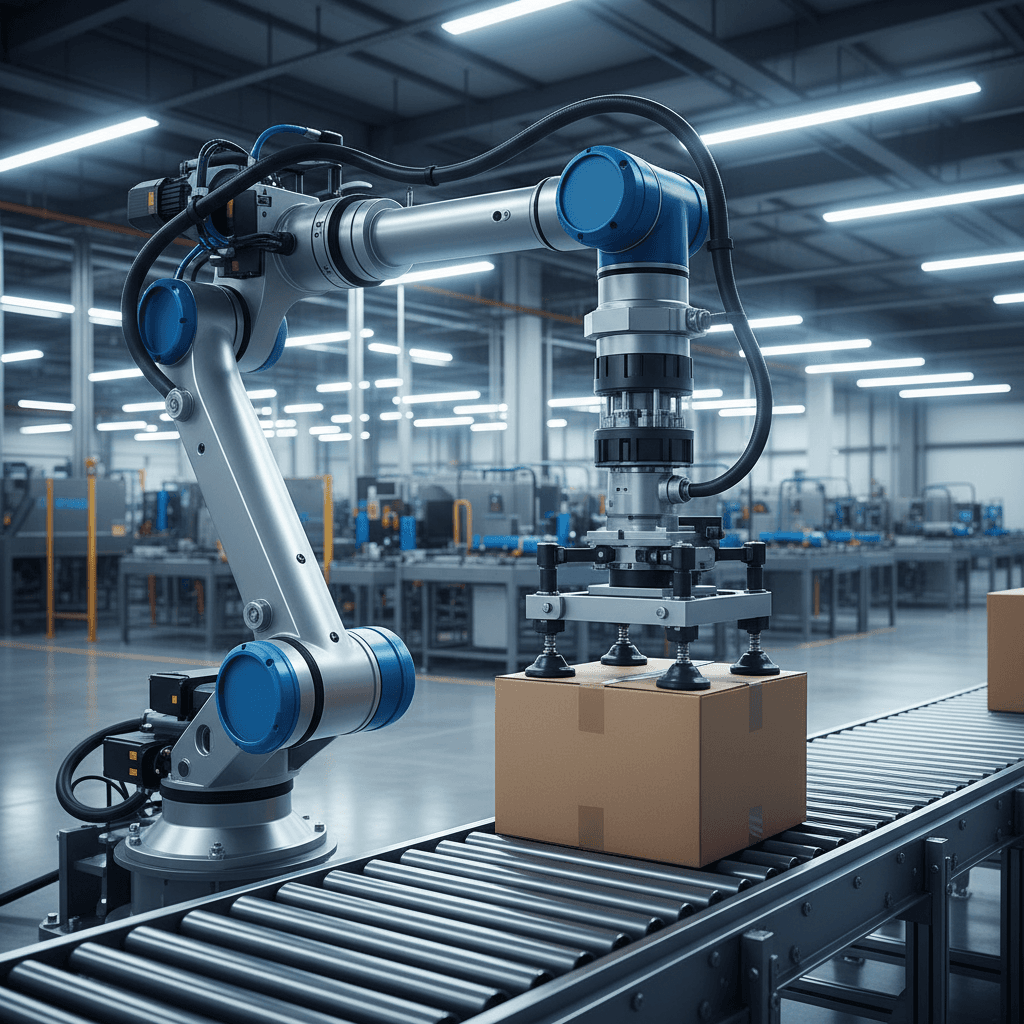
What Robotic Palletizers Can Do
From single-SKU high-speed lines to complex mixed-product operations, robotic palletizing systems adapt to your production demands with precision and reliability.
High-Speed Palletizing
Handle up to 30+ cycles per minute with industrial robotic palletizers. Maintain consistent throughput across multiple shifts without fatigue-related slowdowns.
Collaborative Cobot Palletizers
Deploy collaborative robots alongside existing workers without safety caging. Cobot palletizers offer flexible, space-efficient automation for small to mid-size operations.
Mixed-SKU Handling
Palletize multiple product sizes, shapes, and weights on a single line. Vision-guided systems automatically adjust grip patterns and stacking sequences for each SKU.
Custom End-of-Arm Tooling
Purpose-built grippers for bags, cases, bottles, pails, and bulk containers. Vacuum, mechanical, and hybrid end effectors matched to your specific product requirements.
Quick Changeover
Switch between pallet patterns in minutes with recipe-based programming. Operators select product SKUs on the HMI — the robot adjusts pick positions and layer configurations automatically.
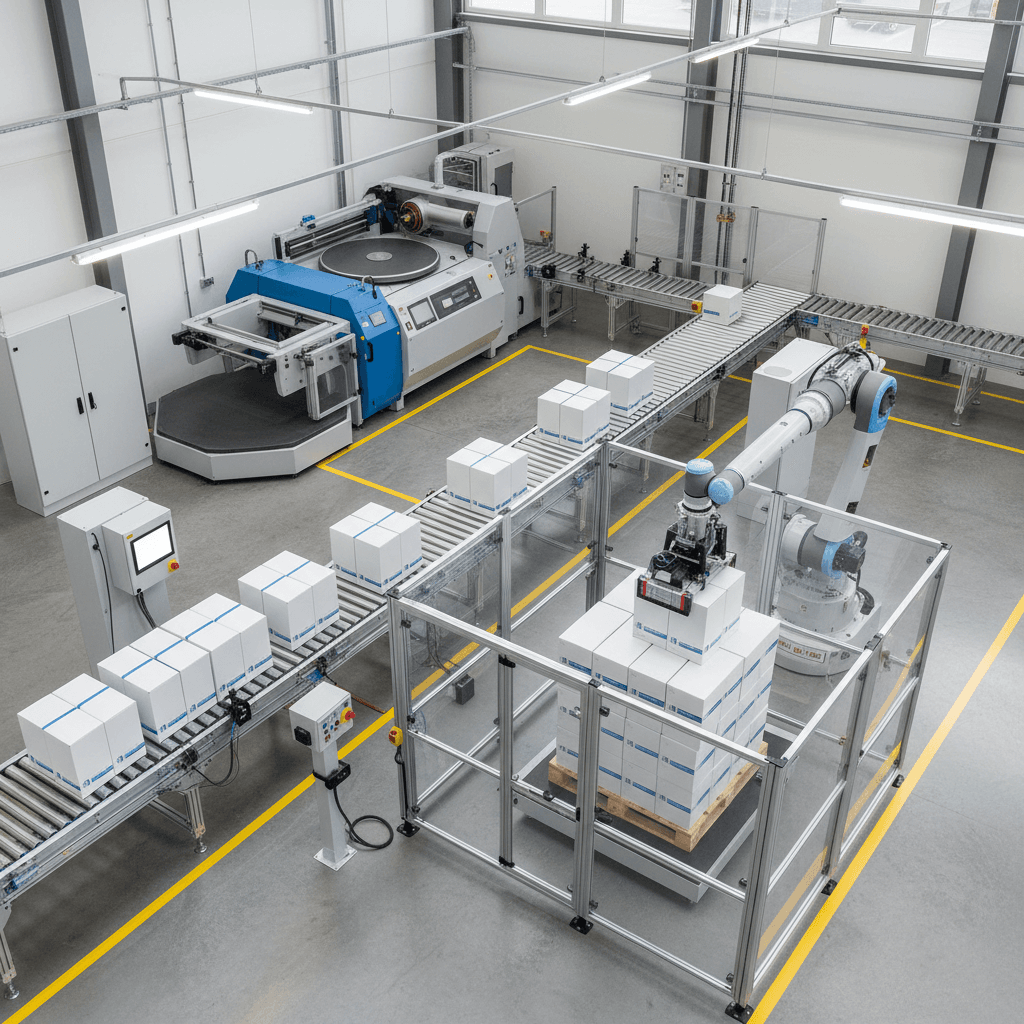
Full Line Integration
Connect robotic palletizers to upstream conveyors, stretch wrappers, labelers, and warehouse management systems. PLC and fieldbus communication ensures seamless end-of-line coordination.
How Robotic Palletizing Works
A continuous, automated cycle that transforms loose products into stable, shipping-ready pallets — with no manual lifting required.
Product Infeed
Cases, bags, or containers arrive via conveyor and are positioned at the pick station. Sensors detect product presence, orientation, and spacing to trigger the robot.
Robot Pick
The robotic arm engages its end-of-arm tooling — vacuum suction, mechanical clamp, or fork — to securely grip the product. Vision systems verify correct pick alignment.
Pattern Formation
The robot places each unit according to a pre-programmed pallet pattern. Layer by layer, it builds a stable, optimized stack configured for your specific product and shipping requirements.
Pallet Discharge
The completed pallet is conveyed to a stretch wrapper or staging area. An empty pallet is automatically dispensed and the cycle restarts with zero downtime between loads.
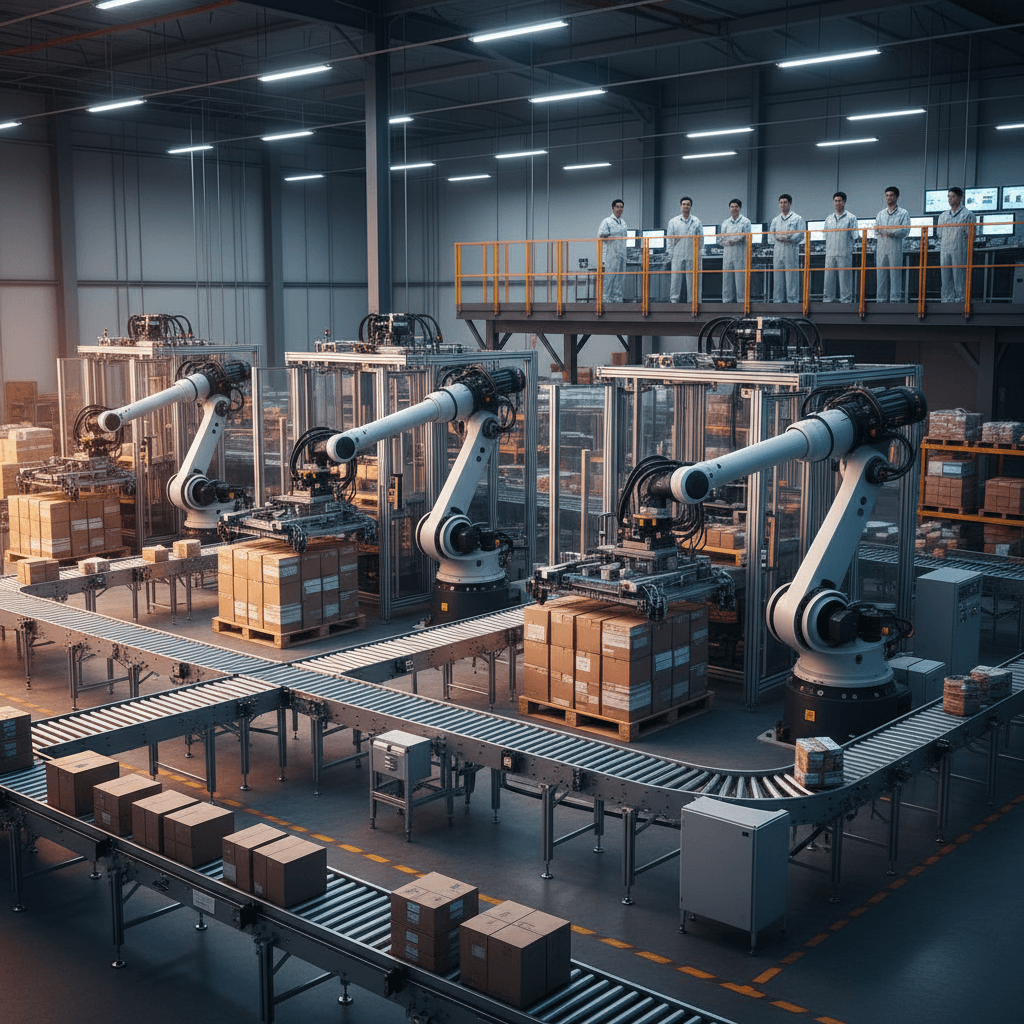
Why Automate Palletizing?
Reduce Labor Costs
A single robotic palletizer replaces 2-4 manual palletizing positions per shift. Across three shifts, that eliminates 6-12 headcount worth of repetitive, injury-prone work.
Increase Throughput
Robots maintain peak cycle rates continuously — no breaks, no shift changes, no fatigue. Consistent speed means your packaging line is never bottlenecked at the palletizer.
Improve Safety
Manual palletizing is one of the top causes of musculoskeletal injuries in warehousing and manufacturing. Automating this task eliminates repetitive lifting injuries and reduces worker compensation claims.
Consistent Pallet Quality
Robots build every pallet to the exact same pattern. Uniform stacking reduces product damage in transit, optimizes trailer cube utilization, and prevents retailer chargebacks for unstable loads.
Types of Robotic Palletizers
Different applications call for different robot architectures. Understanding the trade-offs between speed, payload, footprint, and cost helps you choose the right system.
Articulated Arm Robots
The workhorse of industrial palletizing. 4-axis and 6-axis articulated arms offer maximum reach, payload, and speed. Ideal for high-volume lines running 20-30+ cycles per minute.
- Payload: 40–700 kg
- Reach: 2.0–3.5 m
- Speed: 20–30+ cpm
Collaborative (Cobot) Palletizers
Designed to work alongside operators without safety fencing. Lower speed but faster deployment, smaller footprint, and intuitive programming through hand-guiding or tablet interfaces.
- Payload: 5–35 kg
- Reach: 0.9–1.7 m
- Speed: 6–14 cpm
Gantry / Cartesian Palletizers
Overhead gantry systems that cover large palletizing zones with multiple pick and place stations. Well-suited for high-throughput operations palletizing across several lines simultaneously.
- Payload: 50–250 kg
- Reach: Custom spans
- Speed: 15–25 cpm
Industries Served
Robotic palletizers operate in virtually every industry that moves physical products. The right system depends on your product characteristics, throughput requirements, and facility constraints.
Food & Beverage
Palletize cases of bottled drinks, bagged snacks, canned goods, and frozen products. Stainless steel and washdown-rated systems meet USDA and FDA facility requirements.
Consumer Packaged Goods
Handle high-volume, multi-SKU product lines with frequent changeovers. Robotic palletizers keep up with packaging line speeds while adapting to seasonal packaging variations.
Building Materials
Stack heavy bags of cement, sand, mulch, and aggregate with payload capacities up to 500 kg. Robust 4-axis and 6-axis robots handle the weight and dusty environments.
Pharmaceuticals & Healthcare
Gentle handling for fragile medical products and pharmaceutical cartons. Cleanroom-compatible systems with lot tracking and serialization integration for regulatory compliance.
Seamless Line Integration
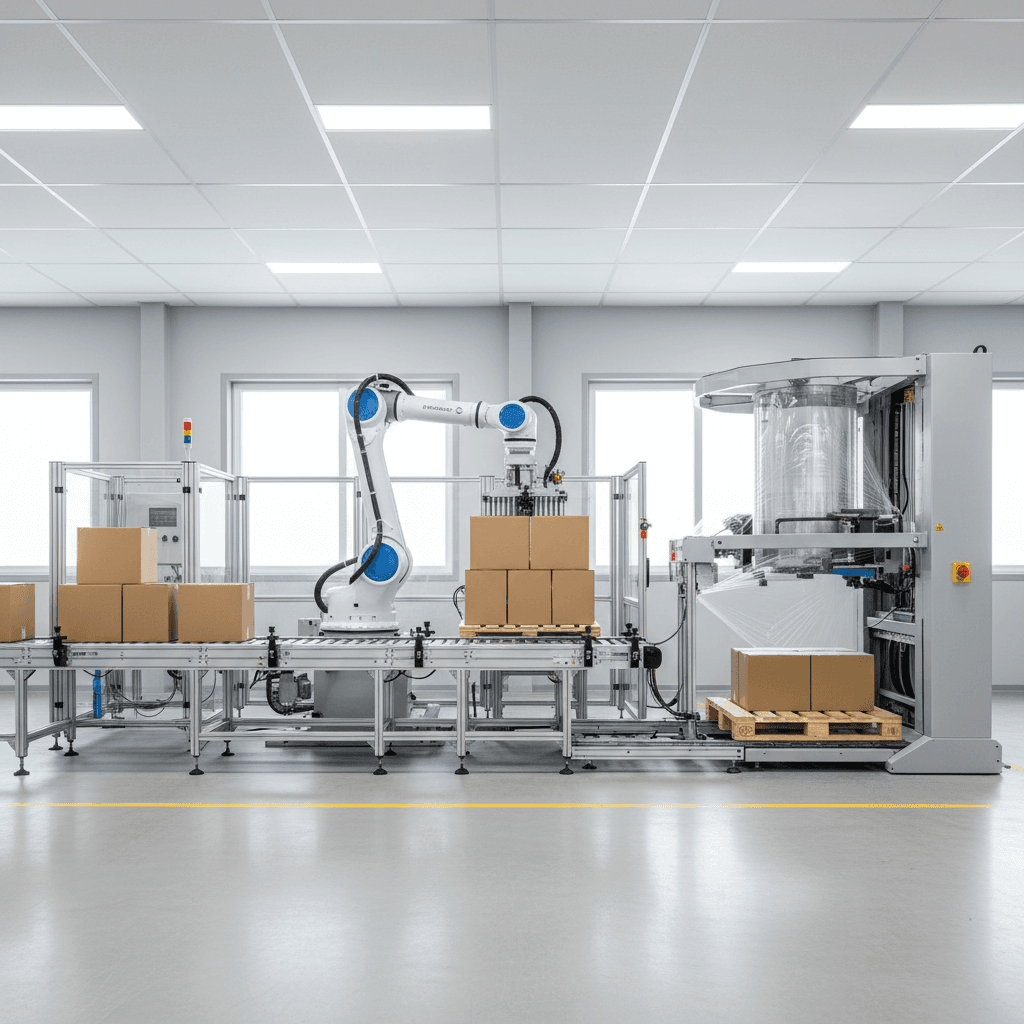
A robotic palletizer is only as effective as its integration with the surrounding line. Modern systems communicate with upstream and downstream equipment to keep the entire end-of-line running in sync.
- PLC integration via EtherNet/IP, PROFINET, and Modbus
- Upstream conveyor synchronization and accumulation control
- Automatic pallet dispensing and slip-sheet insertion
- Stretch wrapper handoff with auto-eject to staging
- WMS/ERP connectivity for order-driven palletizing
- OEE monitoring and remote diagnostics dashboards
Get a Robotic Palletizer Quote
Tell us about your palletizing requirements and we'll connect you with the right solution. Every inquiry receives a response within one business day.